Role
User Experience Design / User Research
Year
2024
Tools
Figma / Miro / Monday
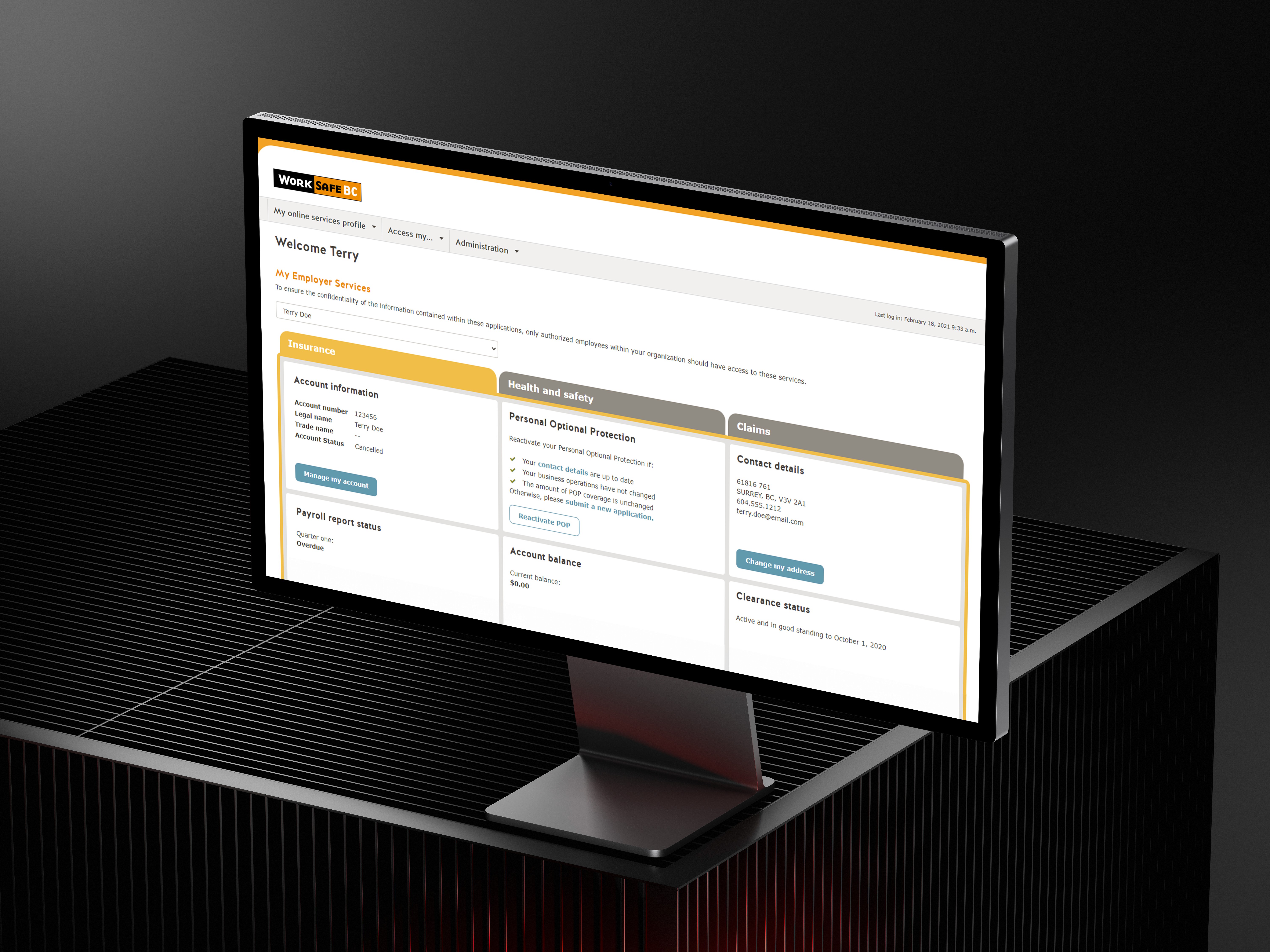
Personal Optional Protection (POP)
This project focused on improving the Personal Optional Protection (POP) reactivation experience within the WorkSafeBC digital ecosystem. As a provincial agency that supports employers and self-employed workers, WorkSafeBC operates in a B2B, compliance-driven environment, while the system functionality and administrative risk directly impact user trust and operational efficiency. (WorkSafeBC, 2022).
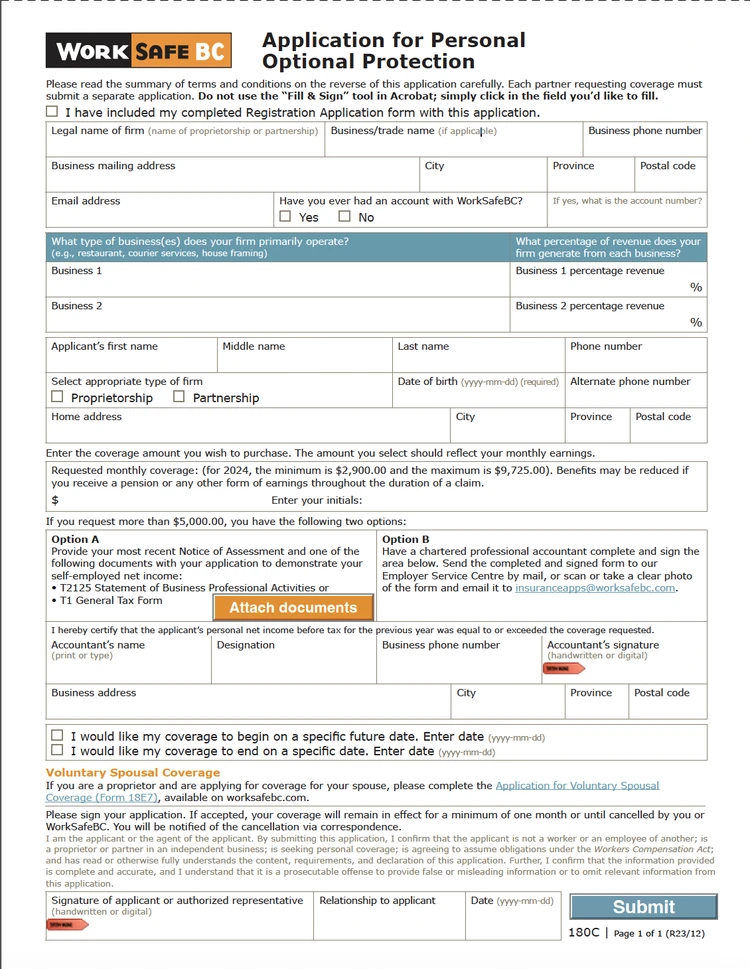
Limited System Flexibility: Sole Proprietors Forced to Reapply After Missed Payment
When sole proprietors miss a POP payment deadline, they are forced to reapply due to limited system flexibility. The current application process requires sole proprietors to submit Form 180C [PDF] either through an online account, by mail, or via fax.
This creates user frustration, delays coverage reinstatement, increases administrative workload for WorkSafeBC staff, and increases the user drop-off rate.
Managing End-to-End Participant Recruitment and Leading User Research
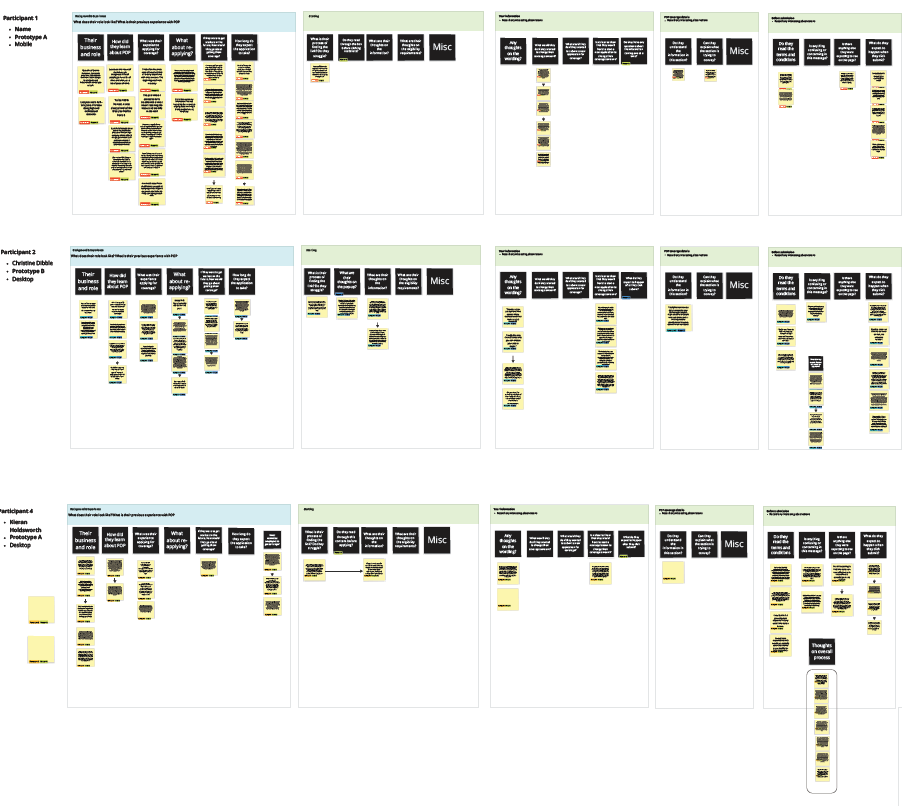
I led the user research journey, including participant recruitment, five interview facilitations, and synthesis, to validate whether a digital reactivation flow could reduce friction while remaining compliant with WorkSafeBC policies.
To evaluate how language clarity and flow structure affected user confidence and impressions, we ran within-subjects comparative usability testing to compare variations in reactivation messaging and task-sequence flow.
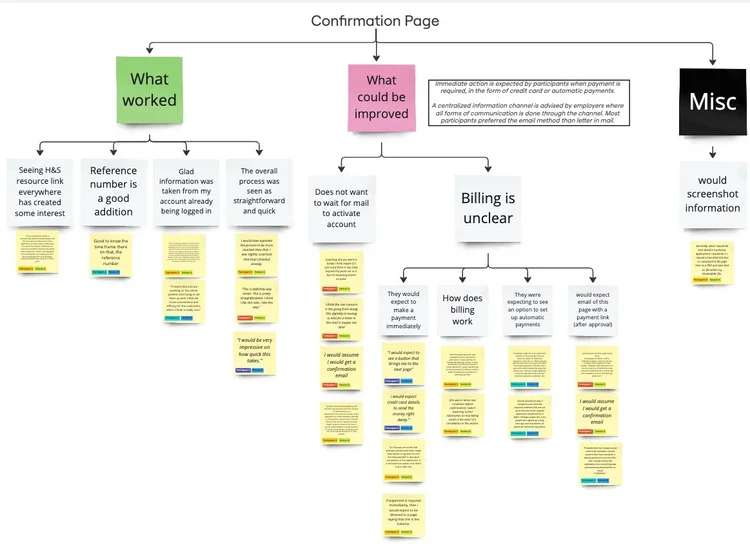
Turning Research into Insights: Simplified Workflows and Increased User Satisfaction
The redesigned POP reactivation flow results in a 60% increase in user satisfaction compared to the previous reapplication process. Clear messaging and contextual guidance reduced uncertainty and improved user confidence in completing the process independently, suggesting a potential reduction in support inquiries and administrative workload.
Although overall sentiment toward POP was negatively impacted by external operational factors, the new flow allowed users to reactivate coverage without restarting the application. At scale, I would evaluate task completion rates, error rates, drop-off points, and support inquiry to validate the long-term impact and operational efficiency.
This project reinforced the importance of designing for failure states and recovery paths, especially where disruptions can directly affect users’ financial and emotional wellness.